
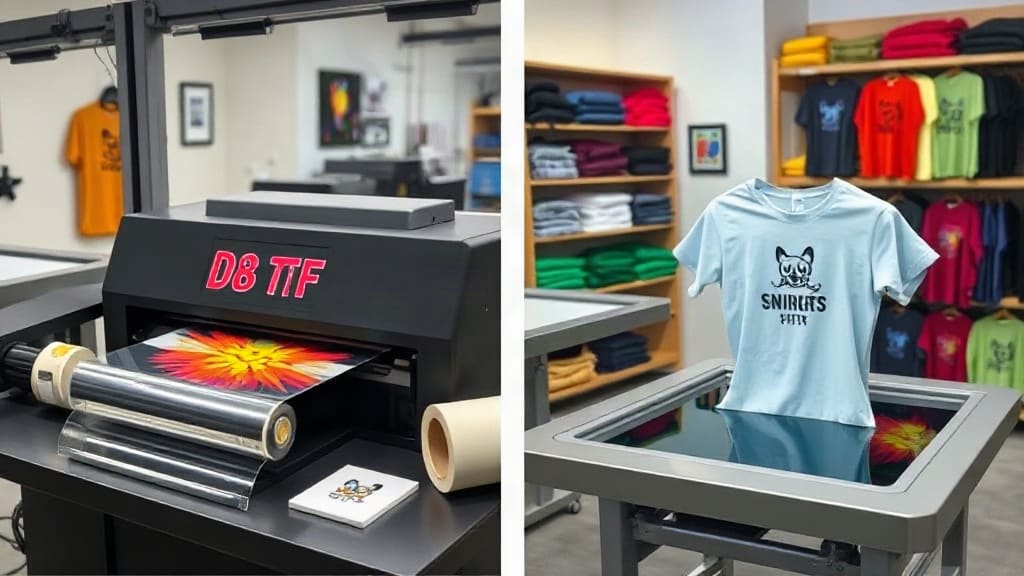
When you're starting or growing a custom apparel business, choosing the right printing method is one of the biggest decisions you'll make. Two popular options dominate the market: direct-to-film (DTF) and traditional screen printing. Each has its strengths, but they serve different needs. In this article, we'll break down the pros and cons of DTF transfers versus screen printing so you can make an informed choice for your business.
Understanding DTF Transfers
DTF transfers are a relatively new printing technique that involves printing your design onto a special PET film, applying adhesive powder, and then heat-pressing it onto the garment. This method has gained massive popularity because it works on a wide range of fabrics, including cotton, polyester, blends, and even nylon. The process is straightforward: print, powder, shake, and press. It's a game-changer for businesses that want to offer full-color designs without the setup costs associated with screen printing.
Understanding Screen Printing
Screen printing is a time-tested method that has been around for decades. It involves creating a stencil (or screen) for each color in your design, then pushing ink through the screen onto the garment. For each color, a separate screen is required, which means setup is more complex and expensive. However, once the screens are made, printing becomes fast and cost-effective for large runs. Screen printing is known for its durability and vibrant colors, especially on cotton fabrics.
Key Differences at a Glance
To help you quickly compare, here's a breakdown of the main aspects:
- Setup Costs: Screen printing has high upfront costs due to screen creation. DTF transfers have virtually no setup costs, making them ideal for small orders.
- Minimum Order Quantities (MOQs): Screen printers often require a minimum order (usually 12 or more) to justify setup. DTF can do single pieces easily.
- Color Complexity: Screen printing charges per color; more colors mean more screens and higher costs. DTF prints full-color designs in one pass without extra charges.
- Fabric Compatibility: Screen printing works best on cotton; DTF works on many fabrics, including polyester and blends.
- Durability: Both are durable, but screen printing tends to last longer on heavy-wash garments. DTF is also durable if applied correctly.
- Production Speed: For bulk orders, screen printing is faster. For small orders, DTF is quicker because there's no setup time.
- Feel and Texture: Screen prints have a thin, smooth finish. DTF prints have a slight rubbery texture and a visible film edge.
Cost Comparison
Cost is often the deciding factor. Screen printing becomes cost-effective when you order in bulk. A typical screen print might cost $5 to $8 per shirt for a 2-3 color design in quantities of 50 or more. On the other hand, a single DTF transfer can cost anywhere from $2 to $4 for a similar design, depending on size and quantity. However, for very large runs (500+), screen printing unit costs can drop below $3, making it cheaper than DTF.
But don't forget to factor in the initial investment. If you're buying equipment, a DTF printer setup can cost between $5,000 and $15,000, while a screen printing press with exposure unit and dryer can easily exceed $20,000. For a home-based business, DTF is much more accessible.
Quality and Durability
When it comes to print quality, screen printing excels in opacity and color vibrancy on dark fabrics. The ink sits on top of the fabric and can be layered to create thick, opaque prints. DTF prints also look great, but they have a softer, more pliable feel. Durability tests show that screen prints can withstand over 50 washes without fading, especially if using high-quality plastisol or water-based inks. DTF prints, when properly cured, can also last 40-50 washes, making them comparable. However, DTF might crack over time on heavy cotton due to the film's slightly thicker layer.
Production Efficiency
If you're running a high-volume business, screen printing is the winner. Once screens are made, you can print hundreds of shirts per hour with minimal labor. DTF requires each transfer to be printed, powdered, and pressed individually, which is slower. However, DTF allows you to print multiple designs simultaneously and store the transfers for later use, which is perfect for on-demand orders or selling custom prints without holding inventory.
Flexibility and Customization
This is where DTF transfers truly shine. You can print a single custom shirt for a customer's birthday or a small batch for a local event without worrying about setup costs. Screen printing is not practical for one-off jobs. Additionally, DTF allows easy scaling of designs; no need to separate colors, which simplifies the process. For businesses that offer personalization, DTF is the clear choice.
Environmental Impact
Both methods have environmental considerations. Screen printing uses inks that may contain PVC or phthalates, though many eco-friendly alternatives exist. The process also uses water for cleaning screens. DTF uses adhesive powders and films that are not biodegradable. However, DTF produces less waste overall because there's no screen washing, and you only produce what you need. If sustainability is a priority, look for water-based inks for screen printing or eco-friendly DTF films.
Which One Should You Choose?
So, which method is better for your business? It depends on your production volume, design complexity, and fabric choices.
- Choose DTF transfers if you do small orders, offer full-color designs, work with various fabrics, or want to start with low upfront costs.
- Choose screen printing if you have large volume orders (100+ per design), primarily work with cotton, and need the most durable prints.
Many businesses actually use both methods. They use screen printing for bulk orders and DTF for smaller, complex, or sample orders. This hybrid approach maximizes efficiency and profitability.
Frequently Asked Questions
Can DTF transfers be used on dark shirts?
Yes, DTF transfers work exceptionally well on dark fabrics. The white ink layer in the transfer ensures that colors stay vibrant without needing a separate white underbase. Just make sure to use a high-quality transfer film and proper pressure.
How many washes can a DTF transfer last?
With proper application and care, a DTF transfer can last 40 to 50 washes before showing signs of fading or cracking. Washing in cold water and turning the garment inside out can extend the life.
What is the minimum order quantity for screen printing?
Most screen printing shops require a minimum of 12 to 24 pieces, but some may go as low as 6. This is because the setup time and screen costs need to be amortized over the order.
Is DTF more expensive than screen printing?
For low quantities (1-50), DTF is usually cheaper. For high quantities (500+), screen printing is more cost-effective. The break-even point varies based on design colors and garment type.
Can I use DTF transfers on polyester sports jerseys?
Yes, DTF is excellent for polyester because the adhesive and film bond well without the need for special inks. Screen printing on polyester requires special inks to prevent dye migration, so DTF is often easier.
Final Thoughts
Both DTF transfers and screen printing have their place in the apparel industry. DTF offers flexibility and low entry barriers, while screen printing delivers unbeatable efficiency for large orders. Assess your business model, order volumes, and customer needs. By understanding the trade-offs, you can choose the right method or even combine them to grow your business successfully.