
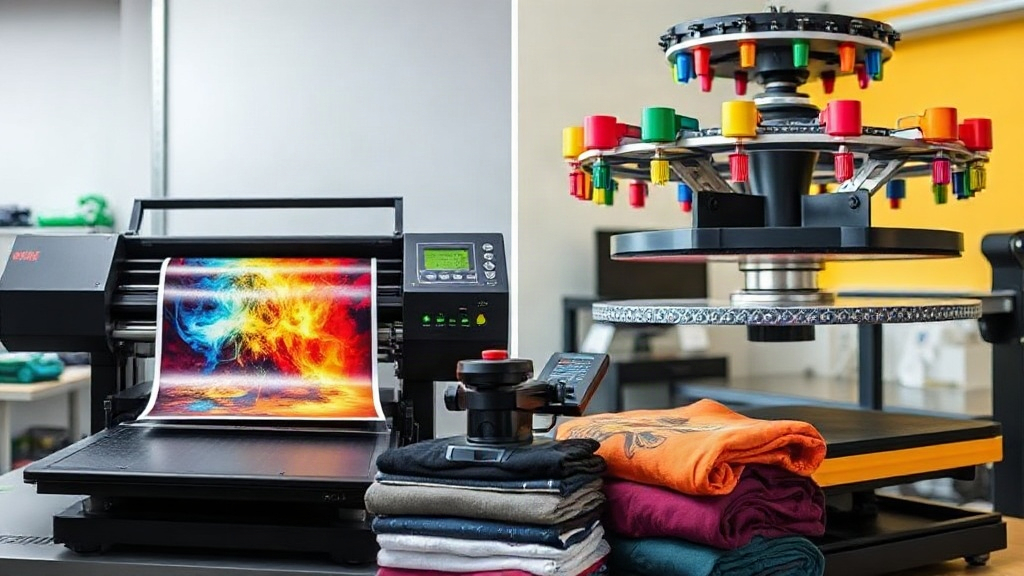
When you run a small apparel business, every decision counts, especially when it comes to decorating garments. You've probably heard about DTF printing and screen printing, but which one is right for your shop? Both have loyal fans, but they serve different purposes. This article breaks down the real-world differences so you can choose confidently.
I've spent years working with both methods, from tiny one-person operations to mid-sized print shops. The choice often comes down to more than just cost per shirt. Let's dive into the nitty-gritty.
What Is DTF Printing?
DTF stands for Direct to Film. It's a digital printing process where you print your design onto a special film, cover it with adhesive powder, and then heat-press it onto fabric. Unlike DTG (Direct to Garment), DTF works on almost any fabric, including cotton, polyester, blends, and even nylon. That versatility is a game-changer for small businesses that handle diverse orders.
The process is relatively simple: design your artwork, print it on film with a DTF printer, apply powder, cure it, and press. No screens, no mess, no color limitations. You can print full-color photos, gradients, and fine details without worrying about color separation.
What Is Screen Printing?
Screen printing, also called silkscreen printing, is the traditional method. You create a stencil (screen) for each color in your design, then push ink through the mesh onto the fabric. It's labor-intensive for multi-color jobs, but once set up, it's incredibly fast and cost-effective for large runs.
Screen printing excels with bold, simple designs on flat surfaces. It's the go-to for team jerseys, promotional tees, and anything that needs to withstand heavy wear. But it struggles with complex gradients and photorealistic images unless you use specialized techniques.
Cost Comparison: DTF vs. Screen Printing
Let's talk money, because that's often the deciding factor. For screen printing, you pay a setup fee per color per screen. That can range from $20 to $50 per screen, depending on your supplier. So a 4-color design might cost $80 to $200 just in setup. Then you have ink and labor costs per shirt.
DTF printing has no setup fees. You pay for the film, powder, ink, and your time. The cost per print decreases as you scale, but it's linear: 100 prints cost roughly 100 times the material cost. For short runs (1-50 pieces), DTF is almost always cheaper. For long runs (500+), screen printing wins on per-unit cost.
But don't forget hidden costs: screen printing requires storage for screens, cleanup chemicals, and reclaiming. DTF needs a printer, film, powder, and a heat press. Both have equipment investments, but DTF printers are generally more affordable for entry-level.
Quality and Durability: Which Lasts Longer?
Screen printing is known for its durability. The ink bonds with the fabric, creating a thick layer that can survive hundreds of washes. However, it can crack over time if not cured properly, especially on stretchy fabrics.
DTF prints are also durable, but they sit on top of the fabric as a transfer. With proper application, they can last 50+ washes. The key is using quality film and powder, and following the correct temperature and pressure settings. On stretchy fabrics, DTF actually performs better because it flexes with the material without cracking.
In terms of feel, screen printing can be thick and plasticky for heavy ink deposits. DTF transfers are thinner and softer, especially with newer films. For vintage or soft-hand prints, DTF often feels more comfortable.
Design Capabilities: Where Each Method Shines
Screen printing is limited by the number of screens you're willing to pay for. Complex designs with many colors become expensive. It's best for bold, solid colors and simple shapes. You can do halftones, but it requires expertise.
DTF printing handles any design you can create digitally: full-color photos, gradients, fine lines, and even simulated textures. There's no color limit. You can print one-off designs without any extra cost. This makes DTF perfect for personalized gifts, small batches, and designs that change frequently.
Speed and Turnaround Time
Screen printing has a longer setup time, but once ready, it's fast. A skilled printer can produce hundreds of shirts per hour. However, if you need multiple colors, each color adds a step. For rush orders, screen printing might not be feasible if you don't have screens ready.
DTF printing is slower per piece because each print must be pressed individually. A heat press takes about 15-30 seconds per shirt, plus prep time. For large orders, this can be a bottleneck. But for small orders, DTF wins because you can start printing immediately after designing.
Environmental Impact
Screen printing uses plastisol inks, which contain PVC and phthalates. There are eco-friendly alternatives like water-based inks, but they're trickier to work with. Cleanup involves harsh chemicals, and screens eventually end up in landfills.
DTF printing uses water-based inks and a powder adhesive. The film is typically PET, which is recyclable in some areas. There's less chemical waste, but the film and powder do contribute to waste. Overall, DTF is considered more environmentally friendly, especially for small runs where screen printing would waste materials.
Which Method Is Right for Your Business?
It depends on your typical order size, design complexity, and budget. Here's a quick guide:
- Choose DTF if you do short runs, complex designs, or print on various fabrics. It's ideal for on-demand and personalized products.
- Choose screen printing if you have large orders (100+), simple designs, and want the lowest cost per unit. It's great for team uniforms and promotional items.
Many small businesses actually use both. They use DTF for samples and small orders, and screen printing for bulk. That hybrid approach gives you flexibility.
Getting Started with DTF Printing
If you decide to go with DTF, you'll need a few things: a DTF printer (or a converted inkjet), DTF film, powder, and a heat press. Start with a small setup and upgrade as you grow. There are plenty of tutorials online, and the learning curve is manageable.
For screen printing, you'll need screens, emulsion, ink, and a press. It's more equipment-intensive but offers higher throughput for large orders. Consider taking a class or hiring an experienced printer to get started.
Frequently Asked Questions
Can DTF printing be used on dark and light fabrics?
Yes, DTF printing works on both dark and light fabrics. The white ink layer in the transfer ensures that colors pop on dark garments. You don't need special pretreatments like you do with DTG.
How long do DTF prints last?
With proper washing (inside out, cold water, no bleach), DTF prints can last 50 washes or more. The key is to follow the heat press instructions for temperature, pressure, and time.
Is DTF printing cheaper than screen printing for small orders?
Absolutely. For orders under 50 pieces, DTF is usually cheaper because there are no setup fees. Screen printing becomes more economical at larger volumes where setup costs are spread out.
What fabrics work best with DTF printing?
DTF works well on cotton, polyester, blends, and even nylon. It's not recommended for fabrics with a heavy coating or waterproof finishes, as the adhesive may not bond properly.
Do I need a special printer for DTF?
You can use a dedicated DTF printer or convert an inkjet printer with DTF ink and a film. Dedicated printers are more reliable and produce better results, but conversions are a budget-friendly option.